
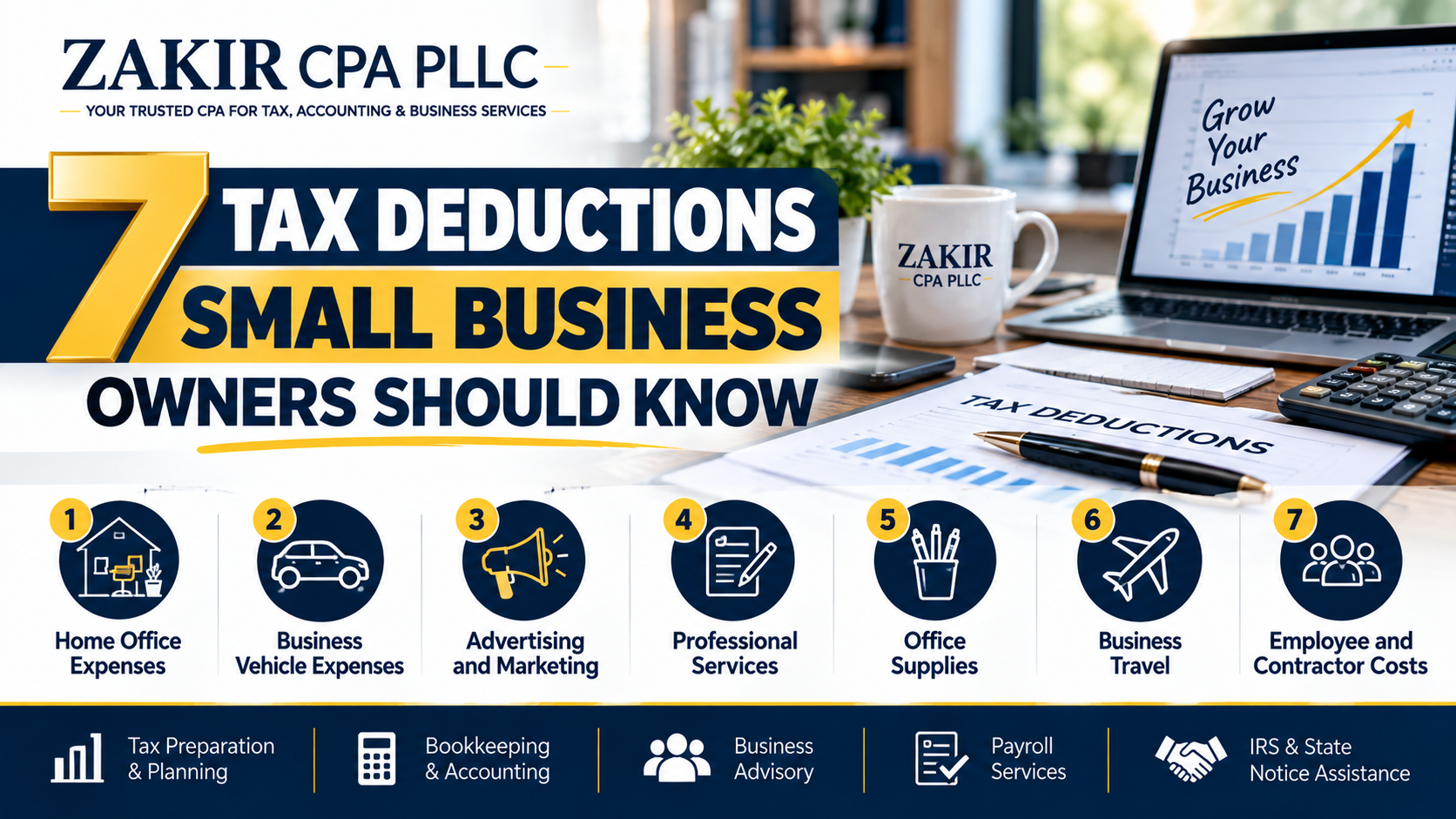
7 Tax Deductions Small Business Owners Should Know
Running a small business comes with many expenses. However, the good news is that some of these costs may lower your taxable business income. By understanding common small business tax deductions, you can avoid missing valuable tax-saving opportunities.
Here are seven tax deductions every small business owner should know about.
1. Home Office Expenses
Do you work from home? If so, you may qualify for a home office deduction.
Generally, you must use part of your home regularly and exclusively for business. However, additional rules apply, and not every home-based business qualifies.
For example, eligible expenses may include part of your rent, utilities, insurance, and other household costs.
In addition, qualifying taxpayers may be able to use a simplified method to calculate the deduction.
2. Business Vehicle Expenses
If you use your car for business, you may be able to deduct certain vehicle expenses.
For example, driving to meet clients or visit business locations may qualify. However, regular commuting between your home and workplace is generally not deductible.
You may be able to use either the standard mileage method or actual vehicle expenses, depending on your circumstances.
Therefore, keeping a mileage log and accurate records is important.
3. Advertising and Marketing Expenses
Advertising helps your business attract new customers. Fortunately, many ordinary advertising and marketing expenses are tax deductible.
For example, qualifying expenses may include:
Website maintenance and advertising
Google and Facebook advertisements
Business cards and flyers
Social media promotions
Printed marketing materials
Other qualifying advertising costs
In addition, tracking these expenses throughout the year can make tax preparation easier.
4. Professional Services
Small businesses often hire professionals for accounting, legal, and other services.
Fortunately, fees paid for qualifying business-related professional services are generally deductible.
For example, you may be able to deduct fees paid to accountants, tax preparers, attorneys, and business consultants.
However, personal expenses and certain costs that must be capitalized may not qualify for an immediate deduction.
5. Office Supplies and Business Expenses
Every business needs supplies and tools to operate. As a result, many everyday business purchases may qualify as tax deductions.
For example, common deductible expenses include:
Office supplies
Printer ink and paper
Business software subscriptions
Postage and shipping supplies
Business telephone and internet costs
Other qualifying operating expenses
Additionally, equipment purchases may qualify for special deductions or depreciation.
Therefore, keep your receipts and separate business purchases from personal spending.
6. Business Travel Expenses
Do you travel for business meetings, conferences, or client visits? If so, certain travel expenses may be deductible.
For example, qualifying costs may include airfare, hotels, local transportation, and eligible business meals.
However, personal vacations are not deductible simply because you perform some business activities during the trip.
In addition, business meals are often subject to a 50 percent deduction limit.
Therefore, keep receipts and document the business purpose of each trip.
7. Employee and Contractor Costs
Hiring employees and independent contractors can help your business grow. Additionally, qualifying payments to these workers are generally deductible business expenses.
For example, eligible costs may include employee wages, employer payroll taxes, and payments to independent contractors.
However, businesses must follow worker classification and tax reporting rules.
Therefore, make sure you maintain accurate payroll records and issue required tax forms.
Why Good Recordkeeping Matters
Claiming tax deductions is important. However, keeping accurate financial records is just as essential.
For example, organized bookkeeping can help you identify deductible expenses and prepare accurate tax returns.
In addition, separating business and personal expenses makes it easier to understand your company’s financial performance.
As a result, you can spend less time organizing paperwork and more time growing your business.
Need Help With Your Business Taxes?
Every business has different tax needs. Therefore, working with a qualified CPA can help you understand which deductions may apply to your situation.
At Zakir CPA PLLC, we help small business owners with tax preparation, bookkeeping, accounting, and tax planning.
Whether you operate an LLC, S corporation, partnership, or sole proprietorship, our team can help you stay organized and meet your tax obligations.
Contact Zakir CPA PLLC today to schedule a consultation.
Bronx Office: 2152B Westchester Ave., Bronx, NY 10462
Queens Office: 164-19 Hillside Ave., Jamaica, NY 11432
Phone: 929-207-1516
Website: www.zakircpa.com
Disclaimer: This article provides general tax information and is not individualized tax or legal advice. Deduction eligibility depends on your business structure, expenses, and applicable tax rules.
Good Recordkeeping Matters
Taking deductions is only part of the process. Maintaining organized and accurate financial records throughout the year can make tax preparation easier and help ensure that eligible expenses are properly documented.
Keeping your bookkeeping up to date can also give you a clearer picture of your business’s financial performance throughout the year.
With Your Business Taxes?
Every business has a different tax situation. Zakir CPA can help with bookkeeping, tax preparation, and ongoing tax support so you can spend more time focusing on your business.
*This article provides general information and is not intended as individualized tax or legal advice. Tax rules and eligibility requirements vary based on individual circumstances.